
The Ultimate Beginners Guide to Veneers: Types, Uses and Pro Tips
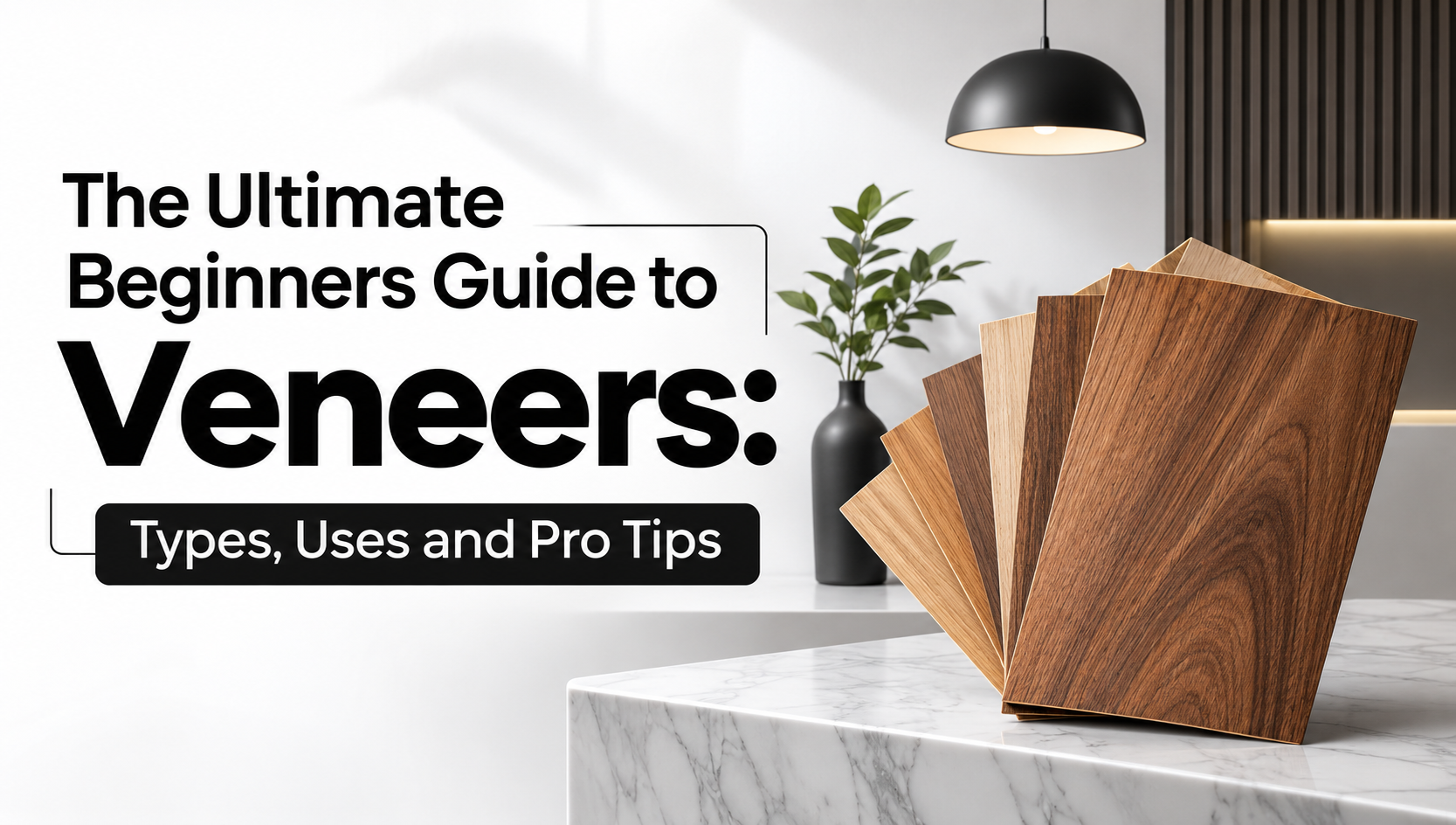
Ever see a nicely finished wooden wardrobe, an elegant TV unit or a stylish wall panel and wonder how it gets that rich natural wood look? Quite often the secret is veneer. It imparts to furniture and interiors the warmth and character of real wood, without requiring solid timber for the entire structure.
Modern homes are often fitted with veneers because of the amount of design possibilities. If you are furnishing a new home, remodeling an existing home or just looking for ways to improve your furniture, veneers are worth a look.
But if you’re just hearing the term for the first time, choosing one can be a little confusing. So, what exactly is a veneer? Are all veneers identical? Where do you use them? And how do you know which is right for your home?
So, let's start with the basics.
What Are Wood Veneers Exactly?
A veneer is a thin layer of real wood applied to a furniture surface to give it the natural look of wood. It is normally adhered to a backing material such as plywood, MDF or particle board.
Manufacturers apply a thinner sheet of natural wood to the visible surface rather than construct an entire wardrobe, cabinet or table from solid wood. This gives the end product the appearance and touch of real timber and allows wood to be used more efficiently.
One of the best things about natural veneers is that they maintain the individual character of the wood. The grain, texture and slight variations in color mean that each sheet is ever so slightly different. This is what gives veneered furniture its special quality.
Veneers also provide flexibility in interior design. You can try out different wood species, colors and grain patterns, without having to use solid timber for the whole project.
Understanding the Different Types of Veneers
If you’ve begun to research veneer options, you may have found there are a few different kinds out there. They are different in construction, appearance and their best application.
Natural wood veneers are genuine timber veneers. The original grain patterns, color variations and textures of the wood are preserved. The finish can be subtle and understated, or rich and dramatic, depending on the species. Walnut, teak, oak and ash are common species for furniture and interior purposes.
Engineered veneers, or reconstituted veneers, are created by processing and reconstructing wood layers or fibers to produce specific patterns and finishes. They are particularly useful if you want a more consistent look across a few furniture panels. They also provide a wider range of consistent patterns and colors.
Rotary-cut veneers are made by rotating a log against a knife blade, and producing continuous sheets of wood. The resulting grain patterns tend to be wide and flowing, making them suitable for applications where larger surface coverage is needed.
Sliced veneer is produced by slicing a log or timber flitch into thin layers. The final grain pattern is decided by how the wood is cut. Some finishes have straight, clean lines; others have more decorative, distinctive patterns. These are often chosen for high-end furniture and feature wall surfaces.
Where Else Can Veneers Be Used At Home?
One reason why veneers work so well in interior design is that they can be used in almost any room. They can add warmth to a contemporary space, lend character to simple furniture and help create a consistent look throughout the home.
Veneers are often used for TV units, entertainment consoles, cabinets and decorative wall panels in the living room. When paired with neutral walls and soft furnishings, a natural wood finish can bring warmth and welcome to a modern living room.
Another great place to use veneers is in the bedroom. Wood has a natural look, making it a great feature for wardrobes, bedside tables, dressing units and headboards. For a laid-back, airy vibe, opt for lighter shades, or go darker for a more sumptuous, dramatic look.
Veneers can also be used for kitchen cabinets and shutters if the material and finish chosen are suitable for the environment. Proper sealing and edge protection is very important in kitchens due to moisture, heat and frequent cleaning.
Veneers can give a professional look to workstations, conference tables, reception desks and wall panels in offices and commercial settings. These are particularly good when you want a coordinated finish on a number of surfaces.
Difference Between Veneers and Laminates?
It’s probably one of the first questions that comes up when you’re choosing finishes for furniture. Veneers and laminates may look similar at first glance but they are different.
The main difference is the material per se. Veneers are made of real wood, while laminates are manufactured decorative surfaces. Veneers retain the natural grain and character of the timber, whereas laminates use printed or manufactured patterns to imitate the look of wood, stone and other finishes.
They also differ in how they age and are maintained. Depending on the thickness and condition of the veneer, they can be polished or refinished. Laminates are generally easier to clean and are available in a wide range of colors, patterns and textures.
So which one do you go for? There isn’t a right answer. If you like the natural variation and warmth of real wood then veneers might be the better choice. For a consistent finish that’s fairly easy to maintain, laminates may be the way to go.
You should make your decision based on your intended application, your budget and how much maintenance you are happy with.
Choosing the Right Veneers for Your Space
Choosing a veneer is not just a case of picking a nice shade out of a catalog. You will need to think about how it will work with the rest of your interior.
Choose what you want the whole thing to look like. Lighter wood shades can make a room feel open and relaxed, while darker tones often add depth and a more sophisticated feel. The grain pattern is also important. Straight grains have a clean, modern look, and more expressive patterns can act as a center of attention.
Another detail that is easy to overlook is lighting. A veneer that looks warm and golden in a showroom can look very different under your home’s lighting. Always ask for samples and if you can see them with your flooring, wall colors and other furniture finishes.
Be sure to ask not only what the base material is, but how it is applied. A beautiful veneer may not give you the finish you expect if badly bonded or finished. Check the substrate, adhesive, surface preparation and protective coating before making a final decision.
Pro Tips for Veneer Maintenance
Veneered furniture is not difficult to look after, but a bit of attention can make all the difference.
For everyday cleaning, a soft, dry or slightly damp cloth will usually be enough. Don’t use too much water as the moisture can affect the veneer and the glue behind it. Clean up any spills immediately, especially at edges and joints.
Over the long term, try to keep veneered furniture out of direct sunlight. When natural wood is left in the sun for a long time, it will gradually change color. Also, it's best to avoid strong cleaning chemicals, abrasive scrubbies and too much heat.
Simple habits such as coasters, mats and surface protectors can help to prevent everyday scratches and marks. If a surface is damaged or the finish is starting to peel, it is best to have a professional look at it, rather than trying to repair it yourself if you don’t know what type of veneer it is and how thick it is.
Choosing the Right Veneer Partner
Selecting a veneer is just part of the process of achieving the finish you want. The quality of the material, the consistency of the product and the advice you get when selecting can make a real difference to the end result.
If you are looking for a veneer manufacturer in Mumbai, take some time to understand the range of options available, the quality of the products and whether the manufacturer can help you identify the right finish for your project.
Similarly, a good veneer supplier in Mumbai should be able to help you explore different wood species, grain patterns and finishes and advise you on their suitability for specific applications.
Once you have the right information and a good choice of options, the selection process becomes so much easier, especially if you are planning a bigger interior project.
Get Your Interior Vision Right with Right Veneers
Veneers are a great way to bring the warmth and character of natural wood into a home. The right veneer can make a noticeable difference to the overall look of your space, whether you are planning an elegant wardrobe, a statement TV unit, decorative wall panels or beautifully finished furniture.
Puno Interior is committed to helping customers find veneer options that fit their design preferences and interior needs. Whether you are looking to do a full home make over or looking for the perfect finish for a single piece of furniture, Puno Interior can assist you in making a better choice.
Fancy a natural wood finish for your interiors? Explore the possibilities with Puno Interior and find the perfect mix of texture, grain and color for your space. Get in touch today and let's start creating interiors that look as good as they feel.
